
Florida Family Law Blog
Your Guide to Florida Family Law

Contested Divorce Strategy Florida Clients Need
A contested divorce in Florida is not won by anger, delay, or empty threats. It is built through preparation, evidence, disciplined negotiation, and trial readiness. This article explains how strategy affects parenting disputes, temporary relief, financial discovery, equitable distribution, alimony, settlement leverage, and the decisions that can shape the outcome of a serious divorce case.

What Happens at a Florida Temporary Relief Hearing on Parenting Issues?
A temporary custody hearing can shape a Florida parenting case long before final trial. This article explains what judges consider, what evidence matters, what temporary orders may include, and how parents can prepare for a hearing involving time-sharing, safety concerns, school issues, communication, and the child’s best interests.

Marital Versus Nonmarital Assets in a Florida Divorce
Before property can be divided in a Florida divorce, the court must decide what belongs in the marital estate. This article explains how Florida courts classify marital and nonmarital assets, why title alone does not control, and how disputes over homes, retirement accounts, businesses, inheritances, and commingled funds can shape the financial outcome of a divorce.

How to Prepare for Divorce Mediation
Divorce mediation can resolve major issues, but only if you walk in prepared. This article explains how to organize financial records, evaluate parenting issues, understand your priorities, avoid vague settlement terms, and negotiate from a position of strength in a Florida divorce mediation.

Should I Hire an Attorney or Use Artificial Intelligence for My Divorce and Child Custody Case?
Artificial Intelligence can be a powerful tool for understanding divorce and child custody issues, organizing facts, and preparing better questions. But AI is not a lawyer. It cannot walk into court, cross-examine a witness, object to bad evidence, read a judge, or protect you when your parenting rights, assets, support obligations, and future are on the line.

Expert Witnesses and the Florida Rule of Sequestration
The Florida Rule of Sequestration is not just a courtroom formality. It can shape how testimony unfolds, whether witnesses hear each other, and whether expert witnesses are allowed to remain in the courtroom during trial. Many lawyers assume experts are automatically exempt. They are not. In Florida, the party seeking to keep an expert in the courtroom must be prepared to show why that expert’s presence is essential to the presentation of the case.
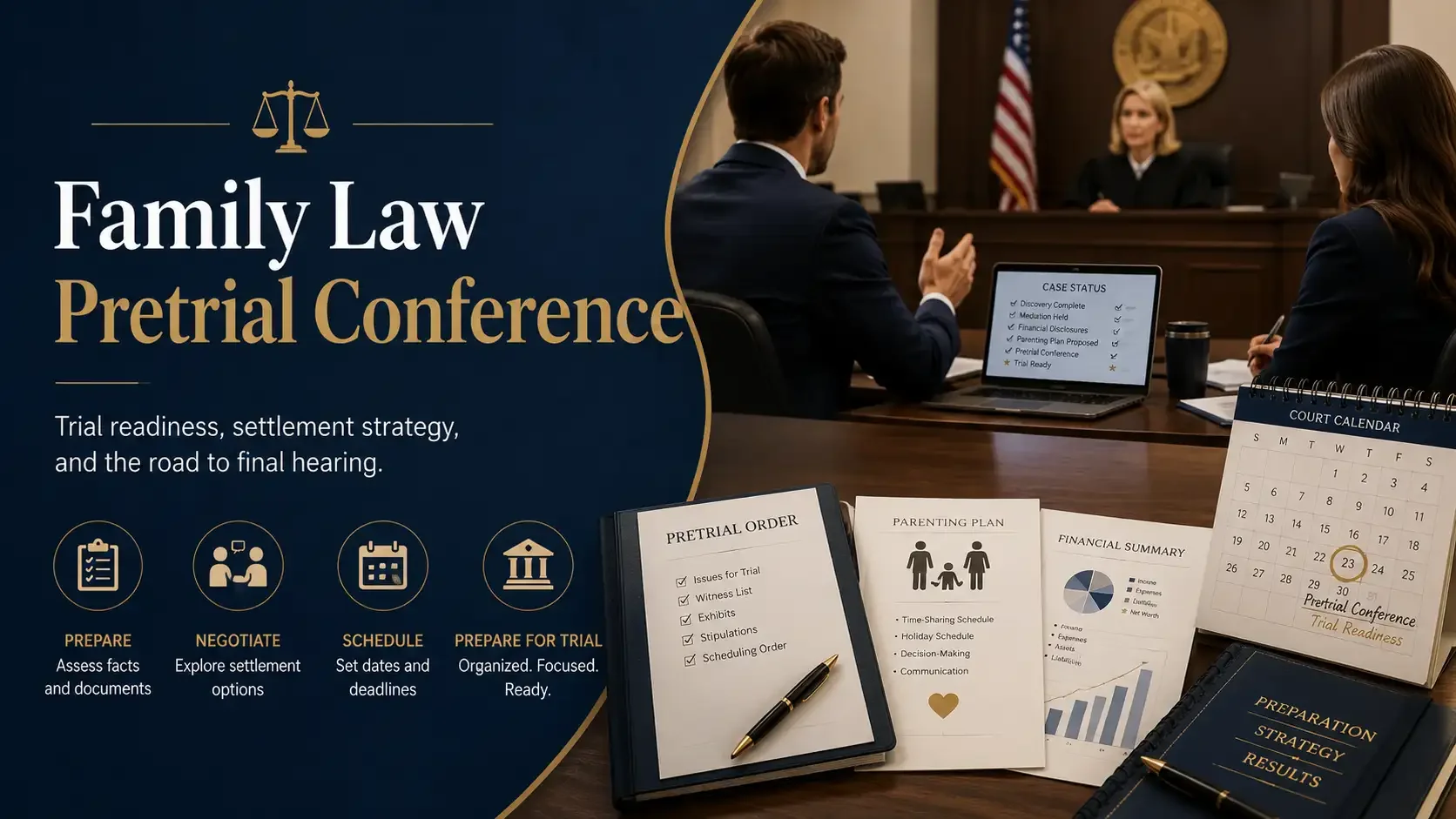
Navigating the Family Law Pretrial Conference
A Florida family law pretrial conference is not just a scheduling hearing. It is where the court narrows the issues, confirms what still needs to be done, addresses witnesses and exhibits, and decides whether the case is truly ready for trial. In contested divorce, custody, support, and enforcement cases, pretrial preparation can shape settlement leverage and trial strategy.
Name Changes in Florida Marriage and Divorce
In Florida, marriage does not automatically change a spouse’s legal name, and divorce does not force anyone to change it back. This article explains how Florida law treats married names, birth names, former name restoration, and name-change requests in divorce cases.
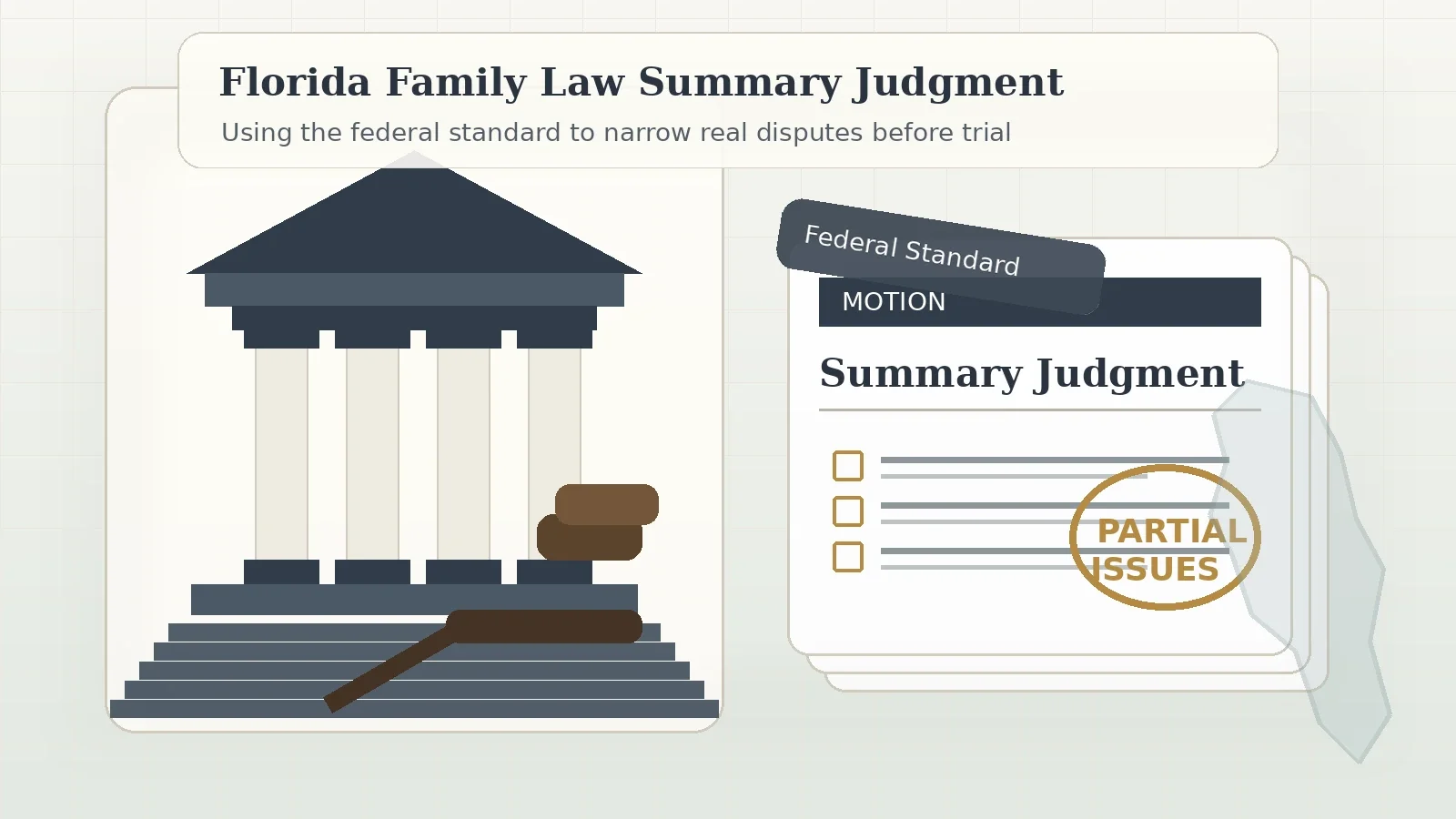
The New Federal Summary Judgment Standard in Florida Family Law Cases
Summary judgment is no longer just a tool for ordinary civil cases. In Florida family law, motions for summary judgment or partial summary judgment may help resolve key issues before trial, including marital versus non-marital property, military retirement division, paternity, and whether a claimed substantial change in circumstances can legally support modification.
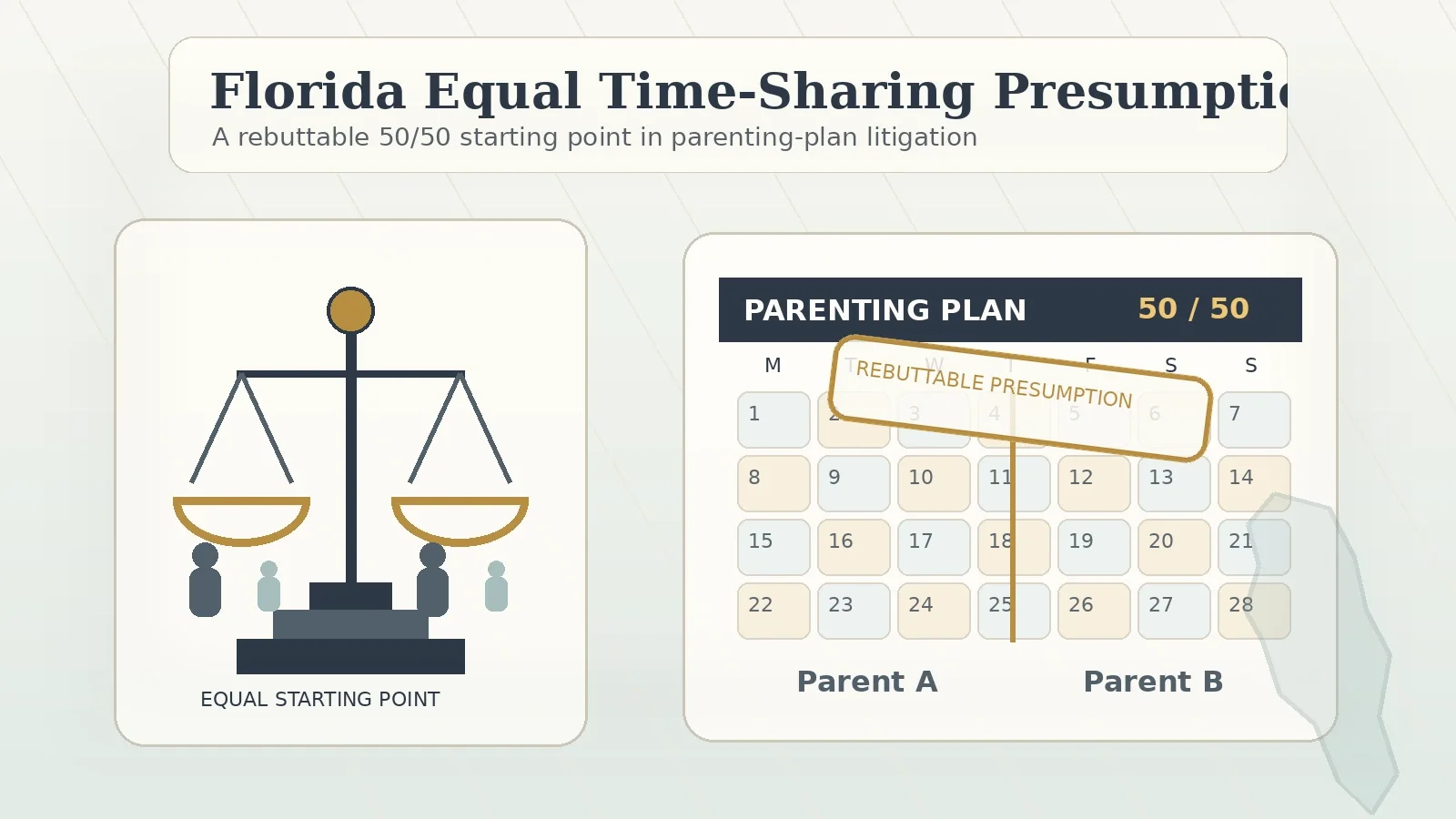
Florida's New Presumption for Equal Time-Sharing
Florida’s 2023 time-sharing law changed the starting point in child custody cases. Courts now begin with a rebuttable presumption that equal time-sharing is in a child’s best interests, but that presumption can still be challenged with evidence tied to the child’s best interests, parental fitness, distance, safety, and the realities of the family.